

For most of the last two decades, logistics professionals in India have worked within a familiar constraint. The intent was always strong. Investment announcements were large. But the reality on the ground often lagged behind.
Roads were built, but last-mile connectivity remained inconsistent. Ports were upgraded, but clearance timelines stayed unpredictable. Warehousing capacity expanded, but multimodal integration did not keep pace. The system improved in parts, not as a whole.
That gap between policy intent and operational reality is now beginning to close. And for businesses running supply chains in India, this is not a minor shift. It is a structural change that requires rethinking assumptions that were valid even two to three years ago.
The Numbers That Signal a Structural Shift
India’s logistics costs have declined to 7.97 percent of GDP, a milestone highlighted in the Economic Survey 2025–26. This reduction is directly linked to large-scale initiatives such as PM GatiShakti, Dedicated Freight Corridors, Bharatmala, and Sagarmala.
This number matters because it represents a structural shift, not a temporary improvement. For the first time, India’s logistics cost burden is approaching the global benchmark of 8 percent.
Execution has also accelerated at scale. PM GatiShakti alone has driven 434 projects worth ₹11.17 lakh crore, while the National Logistics Policy has matured over the past three years. Together, they have improved multimodal freight share and reduced transit times by 15 to 20 percent on key corridors.
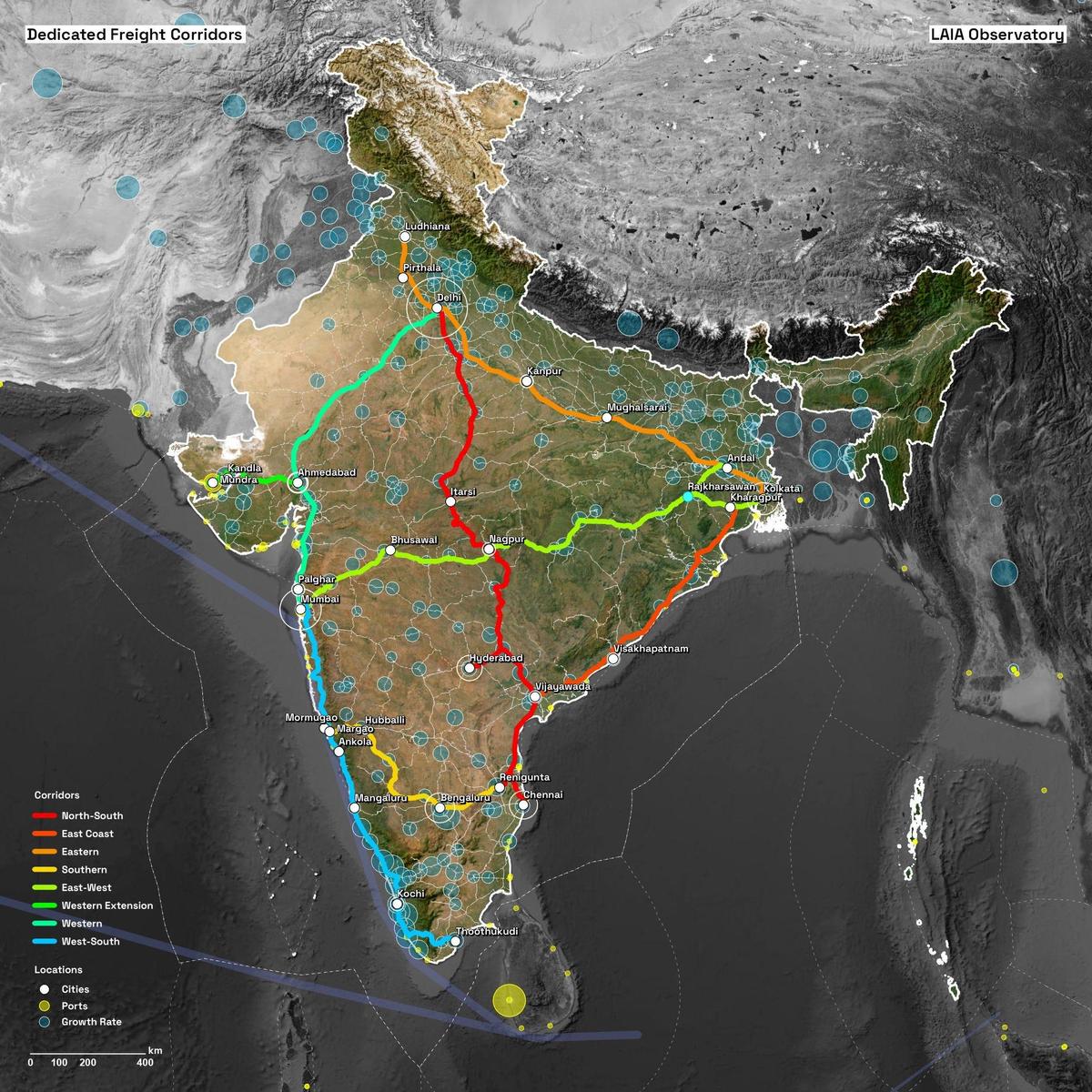
Dedicated Freight Corridors are now 96 percent operational, and 35 multimodal logistics parks received approval in 2025. At the same time, the National Highway network has expanded significantly, growing from 91,287 km in FY14 to 1,46,572 km by December 2025, with high-speed corridors increasing from approximately 550 km to over 5,300 km.
Inland Water Transport has also seen substantial growth, with cargo movement rising from 18 million metric tonnes in 2013–14 to 146 million metric tonnes in 2024–25, supported by 32 operational National Waterways spanning more than 5,000 km.
Read More: Tier 2 and 3 Cities Are Shaping India’s Next Logistics Boom. Are You Ready to Ride the Wave?
What Actually Changed
India’s infrastructure story has always had strong numbers. What has been missing historically is coordination.
That is where the current shift stands out.
By November 2025, 57 ministries and departments were onboarded onto the PM GatiShakti platform, integrating over 1,700 data layers into a unified planning system. The Unified Logistics Interface Platform now connects 44 systems across 11 ministries, with more than 2,000 data fields and over 1,700 registered companies.
This is not just a technology improvement. It is a governance shift.
The inefficiencies in India’s logistics ecosystem were rarely due to lack of investment. They were driven by fragmentation. Roads, railways, ports, and warehousing operated in silos, with limited coordination between agencies.
PM GatiShakti is designed to address exactly that problem. And early indicators suggest that it is starting to work.
Railway project approvals for 2025–26 increased by 56 percent, with route coverage expanding by 114 percent. These projects are not being executed in isolation. They are being planned as part of a coordinated multimodal network.
Why This Matters Now
For businesses operating in India, this creates a strategic question that many supply chain teams have not yet fully addressed.
Are your network decisions still based on the India that existed three years ago?
Most distribution networks, warehouse locations, and carrier strategies were designed around assumptions of high variability, limited multimodal options, and unreliable transit timelines. Those assumptions are becoming less accurate.
Transit times are stabilizing. Connectivity between modes is improving. Inland waterways are becoming viable for certain categories. And logistics costs are declining in a way that directly affects margins.
This changes how supply chains should be designed.
What This Means for Business Operations
The implications are immediate and measurable.
For manufacturers, lower logistics costs translate into improved margins and stronger export competitiveness. For consumer-facing businesses, they create room for pricing flexibility.
More importantly, they open up new possibilities in network design. Warehouse placement decisions that were once constrained by connectivity gaps can now be revisited. Multimodal transport options that were previously unreliable are becoming viable.
This is not just about cost reduction. It is about operational flexibility.
Recommended Reading: Understanding India's National Logistics Policy (NLP) and Its Transformative Potential
Recommended Reading: Understanding India's National Logistics Policy (NLP) and Its Transformative Potential
The Strategic Window
The shift underway is not incremental. It is structural.
And that creates a timing advantage.
Businesses that reassess their supply chain design now will have a period where they can operate more efficiently than competitors who are still working with outdated assumptions. Over time, as the infrastructure improvements become normalized, that advantage will narrow.
The infrastructure bet India made is beginning to pay off.
The question is whether your supply chain is positioned to capture that value, or whether it is still optimized for a version of India that no longer exists.